Our temple runs a bunch of programs for kids that are free and open to anyone. We want people to show up, and we hope people will decide to keep coming back. But if we are hoping that people who don’t decide to join as members will at least make a donation, I think we have to ask. Since we have a flyer about the various family programs, that seems like a fine place to put the request.
We are delighted that you’re joining us for family programs at Temple X. Your participation and support helps us keep our doors open, hire great staff, and run these programs that connect our children to vibrant Jewish experiences and community. Here are three ways you can support us:
Spread the word and bring a friend! We love meeting new people, so tell your friends about our lively family programs.
Donate! Membership dues only cover a portion of our expenses. A lot of our programs happen on Shabbat when we don’t want to talk about money, so when it’s not Shabbat please consider sending a donation to Temple X.
Join us as members! We are committed to creating an active and meaningful community together, and we would love to have your family become members too.
The alternative that we are currently pursuing is apparently to refuse to ask for money, advertise the programs as free, and then become more and more resentful that people are slow to join as members and don’t donate anything to cover the costs of running these programs. Having secret expectations of people is mean and self-defeating.
Sunday, May 22, 2016
Try asking for what you want

Monday, May 9, 2016
Show me the money
It’s budget time for our synagogue, which means the board is reviewing a spreadsheet of the past couple of years of budgeted line items, actual expenditures, projected expenditures, and next year’s proposed budget.
Monday, April 4, 2016
Setting the seder table

Ever since friends gave us a bag of plagues (small plush representations of the 10 plagues), we’ve set those out for each person to have one at the start of the seder. When the time comes to read the list of plagues, each person with that plague (and we’ve learned it helps to pass them out in order in case you can’t tell the difference between the plush cattle disease and the plush wild beasts) lifts up that plague, or throws that plague at an image of Pharaoh on the couch. This does something to make more concrete the idea of a series of plagues. Throwing the plagues at Pharaoh is satisfying, but also a bit dangerous with all the wineglasses around. Perhaps a tall glass cylinder vase that the plagues get stacked into? Yes, with a Pharaoh at the bottom that the plagues are all piling on top of.
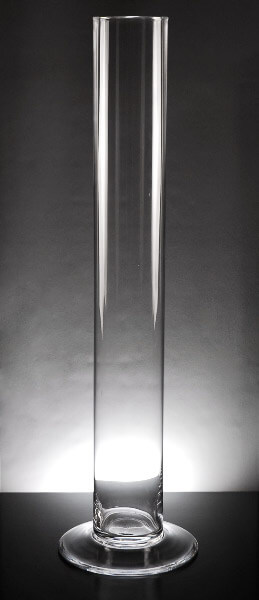
Were the plagues against Pharaoh or against the Egyptians? That’s a huge discussion, and an important one to have. There are issues of how nations can be led, how people are judged for the behavior of their leaders and how they might try to exercise influence or control over their leaders, the appropriateness of collective punishment, etc. Whenever you choose an illustration, you risk reducing ambiguity and imagination. Perhaps a two-sided plush showing Pharaoh on one side and Egypt on the other? The summative nature of the series of plagues works in either case, and the clear glass borders of the cylinder vase emphasize that the plagues were specific in their application to the Egyptians and yet meant to be seen as a lesson to other nations.
What else can we have props for on the seder table? A burning bush candle? Baby Moses in a small reed basket on wheels that we send down the Blutrack Nile? A motorized lazy susan to represent wandering lost in the desert? Or along those lines, perhaps some figures hanging off the ceiling fan blades with a sign pointing North and a question mark as the ceiling fan slowly turns? Surely some of these might spark more conversation than why there’s an egg (or an orange) on the seder plate.
Monday, March 28, 2016
Life update
Sunday, March 27, 2016
Settling debts
Somewhere in Palatine, Illinois, an envelope will arrive tomorrow bearing our final mortgage payment to Ditech Financial. It has been a long 18 years of payments on this very old house, watching the balance decline to a point where one little insurance settlement does the trick and now we own the place.
It came at a cost. We have not kept up with the gradual decline of the house. The kitchen and bathroom have both missed at least two generations of remodeling. Cheap building materials from the early 1970s were not intended to last this long, and they haven’t. Refinancing the house 5 or 10 years ago to pull money out to do sensible remodels and repairs would have been a fine choice, and it’s a choice that we watched plenty of friends make. Somehow we never got organized enough with plans to do that ourselves. Maybe next year.
So I know this stage won’t last long. We’ll have to borrow money on the house again to do necessary repairs over the next couple of years, or we’ll move to another place and take out a new mortgage. And with taxes and utilities and insurance, the mortgage was less than half of our monthly house expenses anyway, not counting the inevitable repairs. But we decided many years ago that it would be nice to pay off our mortgage if we did stay in the house, and we kept our eye on that ball, and here we are.
I’m also keenly aware that we are incredibly lucky. I bought this house back when an entire house near Boston was only $225,000. The lack of lending standards back then that eventually destroyed our economy also allowed me to “qualify” for a mortgage in the first place. Our income has been stable enough that we never had to miss payments, and we didn’t run into some other crisis that meant missing payments.
Despite the contemporary view that it’s gauche (not just rare) to have a mortgage burning party, I want to celebrate our good luck. After all, graduations and weddings and even birthdays depend on luck as well. I remember my parents burning copies of their mortgage documents in the fireplace. It was the one and only time they ever used the fireplace in the house I grew up in. I’m thinking I’ll use my Weber grill instead, the one made by Weber-Stephen Products of Palatine, Illinois. For just one blazing minute, let them be the Palatine company to hold our mortgage instead.
The magic number is 10
A Conservative shul with an enormous membership might have weekday services every morning and every evening. A Conservative shul with a tiny membership might have services on Shabbat with no regular weekday services. Regardless of the number of services, each service requires a minyan of 10 Jewish adults.
My Conservative shul has a typical membership: neither enormous nor tiny, but smaller than it once was. The interests of that membership in daily services has waxed and waned, and is presently at that awkward point where not enough people show up to guarantee a minyan, but too many people show up to have it be clearly pointless to hope for a minyan. That awkward number is reinforced by minyan game theory, in particular the minyaner’s dilemma.
If you are not personally committed to going to the service, but you definitely want to go to the service if by doing so you will be the 10th adult so that the service can happen, then you need to know how many other people are definitely going and how many other people are in your position. Assume there are not quite enough regulars to make a minyan. The more irregulars there are, the greater the chance that enough of the irregulars will show up to make a minyan without you showing up. But all of the irregulars are in the same position, and they are each making the same guess about the behavior of the others. When there are not enough regulars, the difference between a sustainable service and an unsustainable service is not actually how good the congregation is at probability. The difference is how the irregulars feel about being the 12th or 14th adult at the service. You need to feel really good about that in order to typically have enough of a cushion that when the usual variation in attendance happens (due to weather, illness, vacations, or key sporting events on television) you don’t often drop below 10.
There are probably ways to affect this by building in escalating rewards. With 10 adults we get to have the service. With 12 adults we get to have dessert afterwards. With 14 adults we get to have a beer afterwards, or we all get party yarmulkes. Or we could skip the party yarmulkes and just act as excited about the 14th person showing up as we do about the 10th person showing up. After all, that 14th person showing up today is what makes it far more likely that the 10th person will show up next week.
My shul gave up on daily weekday services some years ago. Now there’s just a Wednesday evening service each week, with a Thursday evening service added once a month when there’s a board meeting on Thursday evening. Most of the regulars who want a weekday service just come on Wednesdays now. Not enough board members want to go to a service before the board meeting to reliably make a minyan, so as board members we were recently asked whether we want to continue having a service before board meetings. To encourage honest answers, we were told that all answers were ok. Some people said no, some people said they already show up and are frustrated that there isn’t a minyan, some people said yes but they would not personally show up for it, and not enough people said that they had not been showing up and would start showing up regularly. After reading the responses, I thought the conclusion would be that we should stop having the Thursday evening service. Instead we were scolded over email for our wrong answers, and we heard extensive lectures at the next board meeting about the importance of worship services, the importance of community, and the obligation of supporting synagogue functions that we are not interested in so that other people will support the functions that we are interested in.
Aside from the inanity of a group of volunteers being subjected to self-righteous scolding, there was no attempt to examine how far this logic would go. If I am interested in 5 synagogue functions a month and there are 50 to choose from, how many am I obligated to show up at? 10? 30? All 50? Is there any limit to how many daily services we should hold despite a sufficient lack of interest in actually showing up? When I go to a function I’m not interested in, how clear do I need to make it that I’m not interested in being there in order to satisfy the people who need to know that other people are making sacrifices so that more functions can happen? If I go to 10 functions that I don’t want to go to each month, and then I start enjoying 3 of those functions, do they no longer count?
I can see going to a service out of religious obligation or community obligation. I can see a lot of valid reasons to go that do not require me to be delighted to be there. But what I heard at the board meeting is that my attendance at the service will be valued only if my heart clearly is not in it. That seems like a terrible paradigm for a religious service and a destructive model to create for the next generation. I’d rather go back to the party yarmulkes idea.
Monday, March 21, 2016
Speaking up
Saturday, March 19, 2016
So hard to keep track of who Edgepark hates
We have employer-sponsored commercial health insurance for our family, which is lovely. Cigna is a kind and benevolent group of control freaks who tell us exactly what sorts of medical care we are allowed to receive (benefits limitations, prior authorizations, medical reviews, etc.) and who we can use as providers (network limitations).
So when we need medical supplies or medical equipment, Cigna gives us a very short list of companies we are allowed to order from. One of those companies is Edgepark.
Edgepark refuses to sell to customers in a number of states when those customers have Medicaid as secondary insurance. Medicaid helps a lot of people with lower incomes, and Edgepark’s billing department was quite clear that they don’t want customers like that. “People like that are often on fixed incomes,” Edgepark’s billing department supervisor says, and expects me to understand that people like that are undesirable.
My son is 4. His fixed income is $0, as is the case for many 4-year-olds. Despite that, I don’t actually understand why he is undesirable. I think he’s quite cute. More importantly, he is insured.
There are a lot of levels of insanity and frustration here:
(1) We have already hit our son’s out-of-pocket maximum for the year with Cigna, so Cigna would pay Edgepark at 100%. Cigna can confirm this to Edgepark. There would not be any remainder to bill to any secondary insurance or to the customer. Yet Edgepark is very concerned about not being able to collect the $0 balance after Cigna pays them 100% of the contracted amount.
(2) We should be able to decline to use our secondary insurance, and I tried that. I offered to provide full payment for anything that Cigna does not cover. Edgepark says that’s not possible. Why exactly am I not allowed to decline a benefit? The offer of a handout from the state suddenly comes with handcuffs that are not removed even if I decline the handout.
(3) Medicaid as secondary insurance will only cover providers that are in network with our primary insurance, even if there are no such providers. They add no provider options. Instead they remove provider options, even when they are not involved in the financial transaction at all.
(4) Cigna offers no network adequacy exceptions for medical supplies. If there is no cardiologist within 50 miles who is in network, Cigna will let you see an out-of-network cardiologist. That isn’t true with medical supplies, for which Cigna does not recognize any obligation to have any providers in network. But even if they did, they say that Edgepark is technically an option for us to use even if Edgepark refuses to accept our orders.
(5) Edgepark will not bill our insurance and ship the order after they have been paid in full by our primary insurance, or even by us. It is so important to refuse to do business with people who have Medicaid as secondary insurance that even receiving full payment up front would not be enough to overcome Edgepark’s moral objections to poor people and disabled people.
(6) Medicaid is such a persistent stigma for Edgepark that if they get even a hint of Medicaid on a potential customer, they put a block on the account and refuse to remove the Medicaid information.
(7) Edgepark is so concerned about someone with secondary Medicaid possibly concealing that fact and paying on their own that Edgepark hides its own policy about this when signing up potential customers. Remember, it’s not about the money. It’s about not contaminating your customer pool with the wrong sort of people.
What would be different if Edgepark were refusing to do business with black people? It might help to know that 22% of people covered by Medicaid are black, while only 13% of the US population is black. But that’s ok with Cigna (the folks who decide what providers we have to choose from at all); black Medicaid customers can always shop at Byram instead of Edgepark. It doesn’t matter that Byram randomly cancels orders, is frequently back-ordered, doesn’t offer samples, and has fewer product choices. After all, the problem with “separate but equal” was probably the equal part, right?
I’m sure this is fixable. Edgepark could develop a corporate conscience. Cigna could decide to pressure their providers to accept all of their customers, even if they might be poor. We could change the law to say that providers who are willing to be “in network” for a plan must accept all customers who have that plan. We could change the law to say that providers who are willing to be “in network” for any plan must accept Medicare and Medicaid. We could improve societal attitudes towards poor people.
I don’t see any of that happening. Do you?
Friday, February 12, 2016
Playground notes
Sunday, February 7, 2016
Revenue stream
I was distressed at the ritual committee meeting today to learn that the Conservative Movement’s Committee on Jewish Law and Standards had recently decided that it’s now ok for Conservative Jews to eat kitniyot during Passover. The common five grains like wheat are still prohibited, but corn on the cob can start showing up on the seder table. I don’t mind other people making that choice, but I’m feeling a bit lost in this modern world.
Leaving aside the fact that the ruling managed to work in polygamy, the most entertaining aspect of the ruling was learning that back when pottery dishes were reasonably inexpensive, the common practice was to destroy all of your pottery dishes for the start of Passover and buy a new set to use for Passover and then the coming year. Spring cleaning writ noisy.
When I started buying ritual Judaica, I was excited to find so many choices and to be able to choose pieces that spoke to me. I could have a menorah that I loved, and Shabbat candlesticks, and a treasured tallis from Lisa, and a few other things, and then suddenly I was done. There are only so many ritual items you need. Sure, another menorah occasionally enters our life when we find ourselves in Florida with a newborn at the start of Chanukah, but mostly we’re reduced to choosing pretty candles for Shabbat and Chanukah.
It’s a problem that the Judaica industry must also feel. A Miriam’s Cup for the Passover table is a recent addition, and gives each family a chance to search for a new item as well as being a step towards improving gender equality in the tradition. Still, it’s only one more item to find, and then we’re done again.
So I propose a new tradition: the sacrificial dish for the start of Passover, an item which must be purchased each year. It should have a decoration or design related to chametz, and should ideally be used for at least one family meal before the start of Passover. To celebrate the beginning or ending of cleaning the house for Passover, the entire family can gather around and smash the sacrificial dish. I don’t know if there should be a blessing, a song, or a reading to accompany the ceremony, or simply a moment of calm reflection on all that has happened since the previous Passover before the required ritual destruction. Now we do as our ancestors did in ancient times and destroy this dish to prepare for celebrating the Passover.
And if an annual shopping expedition for a sacrificial dish is not enough, surely every family now needs a ritual hammer with which to smash the sacrificial dish.
Wednesday, January 27, 2016
Looks like a nice day to play ball

Monday, January 18, 2016
Rally for the home team
There are 329 state-funded local cultural councils in Massachusetts. There are between 2 and 4 statewide awards each year for LCCs, so if they are randomly distributed across all of the LCCs, any particular LCC should expect to receive an award roughly once every 110 years.
Next month, Medford is receiving its 4th statewide award in the past 9 years. That’s not random. In fact, it’s unprecedented.
(One of the projects we funded when I was on the LCC also won a statewide Gold Star Award, so we’re getting recognition for actual programs as well.)
Medford has had a good number of very active and talented volunteers. That’s part of it. Medford’s city government decided to support the LCC financially, which many cities and towns do not do. That’s also part of it. Medford’s arts organizations and business organizations formed a productive coalition to make the arts more visible in Medford, and that’s part of it. But it’s all hard to reconcile with a city that let one of the largest capacity live theaters in the Boston area rot for decades, a city that blatantly refused to help find a home for a local arts center, a city that allowed a premier dance center to go permanently dark directly across the street from City Hall, a city that cannot seem to support a single bookstore or a single art gallery.
There will always be contradictions, and perhaps art thrives in the spaces where contradictions thrive. But there’s an exciting story to tell here if the new Medford administration wants to promote Medford as a home for the arts.
Sunday, January 17, 2016
Not running a synagogue
Paul Levy, when he was president and CEO of Beth Israel Deaconess Medical Center in Boston, had a blog called “Running A Hospital.” His blog provided some insights into how a hospital CEO viewed various aspects of running a hospital. Then he resigned, and continued his blog with a name change to “Not Running A Hospital.”
Last year I joined my synagogue’s board and gradually discovered that the board has no serious involvement in running the synagogue. Day to day operations cannot be the charge of a group that only meets once a month, but in principle a board could make policy decisions. I suspect the board I’m on is a vestigial remnant of some past time when the board did make such policy decisions, but over time the role of the board has, um, changed? Withered? Atrophied? Fled to Florida?
Let me be clear: I like rituals, and Judaism is full of rituals. Those rituals provide structure and comfort, and allow layers of meaning to both encrust themselves and reveal themselves over lifetimes of experience. Those rituals allow connections within the world today and to generations past and future. The rituals evolve, participation ebbs and flows, and still they provide a deep continuity.
But monthly board meetings as ritual? Incantations of calling the meeting to order and asking for committee reports don’t do it for me. Please join us as we rise on line 12 of the youth group proposed budget and say together, “Thank you for not needing us to do anything or decide anything.” No, I’m ok with skipping that service.
So being on the board has left me more informed about the various decisions that we’re not making. It has sparked plenty of conversations about how synagogue policies could be different, but few of those conversations have happened with other board members and none have had any hope of implementation. With no expectation of affecting actual policies at present, I might as well focus on organizing my thoughts about how policies could be different and why they should be different. And perhaps at some point in the future, I can be a useful part of a team that is running a synagogue.
Friday, January 15, 2016
Correcting gaps in our synagogue membership categories
Because the congregation must be financially viable to survive as a congregation, it is easy for the leadership to focus on membership as a means of maximizing dues. Because we live in a consumerist society, it is easy for individuals and families to focus on minimizing dues (and an easy way is to avoid becoming a member). This focus on dues distracts us from the important aspects of the congregation: community, education, worship, and tikkun olam. We need to focus on building and supporting a meaningful community, make it clear that membership is an important statement of belonging to our community, and ensure that there are no obstacles to becoming and remaining members of our community.
Our synagogue’s current membership policy as spelled out in the bylaws clearly works for the many individuals and families who are members. Unmarried Jewish adults can be individual members, and families where at least one adult is Jewish and all adults in the family are committed to the goals of the congregation can be family members. This leaves a couple of gaps. If an adult wants to be a member but their spouse does not, that adult has no membership option. If a family includes a Jewish child but no Jewish adult (as can happen through death or divorce), that family has no membership option.
We can correct the first gap (when an adult wants to be a member but their spouse does not) by striking the word “unmarried” from the description of individual membership. We should also make it clear that an individual member is welcome to become a family member at any point when a partner or child would also like to be a member.
We can correct the second gap (when a family includes a Jewish child but no Jewish adult) by changing the definition of family membership to be a family where at least one adult or child is Jewish, rather than requiring at least one Jewish adult. It takes courage for a non-Jewish adult to raise a child in Judaism, and we should provide every support rather than turn them away. We want them to feel welcome in our congregation as a family and be able to participate in congregational life. We want the child to attend Hebrew School and to become Bar or Bat Mitzvah. We should open our doors, not close them.
There are good reasons to require family membership for a child to attend Hebrew School and to become Bar or Bat Mitzvah. It reinforces a model of community participation and belonging and ensures greater financial support for the congregation. But that membership requirement should not be a litmus test that some families are not allowed to pass.
If asked, we would make exceptions to our written rules to accommodate individual requests. But rather than exclude some prospective members and then depend on them being willing to ask for exceptions, we should amend our rules so that we can be as welcoming as possible.
Thursday, January 14, 2016
Cummings Park
• teenagers drinking and vandalizing the playground structures (primarily at night)
• dog owners using it as a dog park so their dogs can exercise and go to the bathroom
• adults shooting heroin (primarily at night)
• young children using it as a playground
As with any public space, there are many individual occasional uses as well: birthday parties, geocaching, people doing yoga or tai chi, adults reading or chatting, etc. The only problematic uses are the ones that are incompatible with the intended primary use as a playground for young children (dog run, alcohol and drugs, smoking, and vandalism) or are incompatible with the park being directly next door to people’s homes (noise at night, fires, or golf balls).
There are signs saying that most of those problematic uses are not allowed, but the signs are largely ignored because they are never enforced. Even the huge new "NO DOGS ALLOWED" signs at both entrance gates are often ignored because there is no enforcement mechanism.
For the first decade that I lived next door to Cummings Park, it was a constant source of problems and was seldom used by young children. One week about 7 or 8 years ago, the city finally repaired the vandalized structures and removed the graffiti, the police started occasionally reminding people that the park is closed at night, and families started donating toys to the playground. A number of significant changes happened:
• young children and families started using the playground in far greater numbers
• vandalism mostly stopped
• drinking and drug use in the playground was greatly reduced (as measured by the far lower number of empty bottles and empty needles left in the playground)
The donated toys were a huge part of that turn-around. They encourage families to use the playground and extend the play options for young children. They helped Cummings Park become a destination playground for families who live closer to other parks. They were an asset to the two separate family day cares that both use the playground. And even when the playground is not in use by young children, the presence of the donated toys sends a clear signal that the playground is actively used by young children.
Local musician Matt Heaton even wrote a song about the donated toys in Cummings Park, titled “Outside Toys”.
If you never saw the range of toys donated to Cummings Park, you might not understand the full range of toys that passed through there: shovels and pails, balls, toy trucks and construction vehicles, ride-on toys, walk-behind toys, Cozy Coupes, scooters and tricycles and the occasional bicycle, several play kitchens and plastic slides, little basketball poles, toy lawnmowers, and most recently a plastic gas pump that allowed kids to pretend to be gassing up the various play vehicles.
Here’s a selection of the smaller toys in Cummings Park last year:

Toys eventually wear out, and several park neighbors took responsibility for periodically sorting through the toys and throwing out the broken ones. We also repaired toys when possible, inflated balls and bicycle tires, and worked with the parks department to report wear and damage to the permanent play structures. Mike Nestor at the parks department has been a real ally for years in working with us to keep Cummings Park in good shape to be used by young children and families.
It was, therefore, horrifying to see that the city last week abruptly removed every single donated toy in Cummings Park. This apparently happened around the same time in many or all city playgrounds. There was no warning, no notification, no opportunity for public input, and apparently no recourse. To replace the toys in Cummings Park alone would cost thousands of dollars, and people will be far more reluctant to donate toys when they expect that the city will arbitrarily confiscate them all again at any moment. Cummings Park is now far less appealing and useful for many families who want to use it as a playground. Instead, Cummings Park now looks barren and abandoned, which is exactly the sort of appearance that will lead to an increase in problematic uses of the playground. In a matter of days, it led to a noticeable increase in the use of the playground as an off-leash dog park.
There is widespread frustration, disappointment, and anger about the city’s removal of the toys from Cummings Park on local family-oriented Facebook groups. Here are comments from the last few days:
What happened at Cummings park??? We went there today and it was all cleared out!!! The kids were so sad!
Oh no! Sarah's park!!!!!
My kids loved using the toys at that park
Oh, my boys will be devastated!!! So sad!
So sad! I think people generally do a good job of getting rid of broken toys. I think it's more of an eyesore NOT seeing them
That is terrible, I can't believe they did that!
Oh no my girls are gonna be sad next time we drive by. My oldest had a favorite bike that she always rode on.
My son uses the toys more than the structures.
Ours too! Heartbreaking.
So sad! My daughter loves that park and used pretty much everything! When she was learning to walk she could still play. It's our favorite park. Awwww...
So sad. Bring the toys back
My daughter played more with the toys there than the structures. She will be so upset. I hope they bring them back.
Devastating.... my son adored the toys
It kept the kids happy. Now what?
My other question is why, and is it just going to happen again if the community replaces them? I'd love to know who made the decision and how to make that person aware of just how unpopular it is.
I can't believe they got rid of everything without any kind of notification or explanation, it seemed pretty obvious that the toys are used and enjoyed by the children who play there. It actually is the reason why we choose to go to Cummings park over other parks the majority of the time! My boys loved the diggers, dump trucks, etc they could use with the sand and all of the different vehicles there. Hopefully the city will bring them back.
My daughter always bee lines for the cozy coupe and usually followed that with a session of digging and dumping sand in or with any kind of bucket or container. Small slides are a hit with the littlest ones too - less daunting than then permanent ones. I'm happy to help with this adventure come spring. We love this park! I'm just hoping it's not in vain. Is there any news on whether this is going to be happening repeatedly?
There are several stakeholders who the city should include in any major decisions about Cummings Park:
1. The immediate neighbors of Cummings Park.
2. Sarah Volpe, who has brought her family day care to Cummings Park every day for many years.
3. Andrea Breen at Medford Family Network, who has run the playgroups in the park program for years, is very familiar with many of the city playgrounds, and knows that Cummings Park is in better condition than many because neighbors help care for it.
4. Park users, who can be reached through the Cummings Park Medford Facebook group, the Medford Moms Facebook group, the Medford Family Network mailing list, and signs posted in the park itself.
Here is my list of actions the city should take to improve Cummings Park:
1. Establish some practical enforcement mechanism for the park rules, with police enforcement when necessary to remove dogs and to remove people who are using the park at night.
2. Provide a clear way for park neighbors, community members, and park users to report problematic uses of the park at any hour and get a prompt response.
3. Install “no smoking” signs. This is one of the few actual park rules for which there is no sign.
4. Provide better fencing or containment for the basketball mini-court (which is also sometimes used for hockey and lacrosse), or convert that mini-court into a different use more compatible with being just a few feet from a neighboring home.
5. Clear the sidewalks around Cummings Park in the winter when it snow, and clear a single path through the park itself between the two gates (ensuring that the gates can open).
6. Consider installing water for a bubbler and/or the ability to water new plantings.
7. Consider adding a port-a-potty (as exists at Victory Park) in the corner by the intersection, so that little kids don’t have to use the fence line as their toilet. (This may cause more problems than it solves, but it should at least be discussed.)
8. Hire a new landscape contractor who will mow the grass more than once a month in the summer.
9. Establish a maintenance plan and replacement plan for the park structures. The bouncy bridge on the taller play structure has structural connecting links that are almost worn through, and much of the plastic on the climbing structures is now old enough that it is more prone to break and leave sharp edges. The benches under the gazebo are all bent down at the ends, greatly reducing their usable seating area.
10. Establish a maintenance plan and replacement plan for the park trees and landscaping. Many shrubs have died, the tree warden has confirmed that a number of the trees are unhealthy, and new donated plants cannot survive because there is no on-site water access.
11. Establish a community liaison or two for each city park who can help organize needs and wants for the park, and who can help communicate with the appropriate city employees and with residents and park users.
12. Plan to do regular requests on a schedule for graffiti removal by the Middlesex Sherriff’s Graffiti Removal Unit, which costs the city almost nothing to do. This has been a far less frequent problem at Cummings Park since the donated toys started, but it is an ongoing problem at other parks (and around the city).
13. REPLACE THE TOYS.

