Tuesday, January 10, 2012

Sunday, May 8, 2011
Public art follow-up
After sending my letter to the Community Development Office and following up, the city has actually decided to include public art in a survey about what our open space priorities should be. That’s a good start, and every positive response helps! So before May 20, please fill out the online Medford Open Space and Recreation Public Survey. You don’t have to answer every question.
Your answers on this survey will affect the city’s priorities for the next 7 years! The survey is at:
www.surveymonkey.com/s/QFNQR5S
In question 22, select “Public programming” and “Public and community art” as items that you think need the most improvement in Medford’s parks.
In question 23, say that you do feel that public art should be a priority. Here are just a couple of reasons: public art enhances the quality of life in Medford by encouraging a sense of place and by introducing people to works of art that can reach out to them. Public art energizes our public spaces. And public art can engage and involve the community in its creation, creating pride and a welcome sense of public ownership of our public spaces.
Friday, April 22, 2011
Draft letter for public art: please comment!
[I want to send this letter, or something like it, next week. Medford is creating a new 7-year Open Space and Recreation Plan to lay out priorities for upcoming projects.]
Dear Lauren DiLorenzo,
I encourage you to include planning for public art as a key component of the new Open Space and Recreation Plan you are developing for Medford. Public art inspires people, engages communities, and enlivens public spaces. Public art provides highly visible opportunities to improve neighborhoods, to support local artists, and to involve children, teens, and community members.
When we paint a wall, we have an opportunity to paint a mural. When we rehab a field or park, we have an opportunity to install a sculpture. When we create a path, we have an opportunity to add interesting designs in the path itself. When we order park fixtures such as benches or lights, we have an opportunity to commission some of those fixtures from local artists and craftspeople. The value of our community increases when we seize these opportunities.
Boston’s Public Garden would not be the same without the Make Way for Ducklings statues. New murals in Arlington, Somerville, Malden, and right here in Medford have fostered community pride and turned kids into artists. Union Square recently added diverse and functional art benches. Art such as this in public spaces draws people in, changes their interactions with those spaces, and makes spaces memorable.
The McGlynn School playground is a perfect example of thoughtfully incorporating public art, with its colorful ground design showing the historic contours of the Mystic River and the distinctive curving wall following that contour. We can expand on that success across Medford, giving each playground its own signature artistic component for people to explore. We can include display space in our recreational facilities for rotating art displays, benefiting our artists (whether they are students, professionals, or amateurs) and bringing art to new venues and wider audiences. That is a future I personally want for our city, and I know that I am not alone. When the Medford Arts Council most recently surveyed Medford residents in 2009 to find out what projects should be our highest priority, more than 100 people (half of our respondents) said that they wanted to see more public art in Medford. The Open Space and Recreation Plan can and should respond to that need.
There are numerous arts groups in Medford who would be delighted to offer suggestions and feedback. Please let me know if I can help put you in touch with them.
Sincerely,
...
Thursday, March 25, 2010

Tuesday, December 29, 2009
Monday, November 2, 2009

Tuesday, June 2, 2009
And they all look just the same
Little boxes on the hillside,
Little boxes made of ticky tacky,
Little boxes on the hillside,
Little boxes all the same.
When I was younger, I used to visit MoMA on my own a lot. I was fascinated by the pop art, the sculpture garden, the luxuriant tropics in the Gauguins and Rousseaus, the cubist pieces and the surrealist pieces and the beautiful Water Lilies room. I loved the idea that all of these wonderfully different approaches to presentation and representation were art, and that they could all coexist in a limited collection unified only by their recency and their significance.
MoMA was a relatively small museum in those days. The layout was quirky, but felt like it had been designed to perfectly fit and spotlight the art on display. It was easy to pop into for an hour to see all my old friends on the walls, or spend a little longer slowly losing myself in the impressionist paintings.
10 days ago, on the 5th floor of the massive rebuilt MoMA, I wanted time and space to mourn the loss of that museum. It was an insanely crowded Friday evening, and the couple of hours we had allotted were clearly not going to be enough time to see more than a fraction of what was on display. And what was on display was no longer edited. Paintings were not arranged thoughtfully within most of the galleries. The galleries had no clear focus, organization, or progression, and the gallery spaces were just a series of impossibly dull rectangular boxes, all alike. The collection felt uncurated and the architecture within the galleries felt utterly inartful.
Many of my old friends were on the walls, scattered around this ticky tacky maze. There were some new wonderful pieces as well—century-old Russian cubist paintings that I’d only seen in books, a new Sol LeWitt wall installation, plenty to please my visual palate if I didn’t mind the clutter of all the dozens of unappealing and uninteresting paintings. But I do mind the clutter. My favorite bookstore ever was Zembla Books, a tiny shop outside of Davis Square 15 years ago whose owner had filled the small space with books I wanted to read and almost nothing else. That was the MoMA I knew, and had hoped to return to. I found WalMoMArt instead.
Thursday, February 12, 2009
From untitled to unattributed; or, the rapid decline of the ICA
Shepard Fairey has been much in the news, between the AP pointing out that he took the image of Obama for his Obama Hope poster from an AP photograph, his inexplicable solo show at the ICA in Boston, the overwhelming volume of promotion for his ICA show, and his arrest by the Boston Police because of his past (alleged/admitted/celebrated) tagging around Boston. The AP flap has gotten people all confused again about the difference between copyright infringement and plagiarism. Here’s one way to think about it: art may involve copyright infringement, but art should never involve plagiarism.
As hard as it is to define art, we should all agree that art has to include some originality. Plagiarism—the passing off of someone else’s idea as your own—does not preclude originality, but it deceives the audience as to what that originality includes. For that reason, plagiarism is simply incompatible with art. Shepard Fairey knows that he plagiarizes. The ICA apparently doesn’t know, or doesn’t care. Out of all the fawning and foaming that Shepard Fairey has induced around Boston of late, it’s the acceptance of plagiarism by our Institute of Contemporary Art which truly reflects poorly on our fair city.
Friday, January 30, 2009
Closing the Rose
In a colossal failure of public relations, donor cultivation, and fiscal management, Brandeis recently announced their intention to close the Rose Art Museum and sell off their entire collection of art. At least they haven’t yet torched the collection for the insurance money, though they may consider that when they discover that potential buyers live in the same economic climate as Brandeis, and aren’t eager to pay anywhere close to the inflated appraised value of the collection.
Now the Brandeis COO has come forward to explain that the only other choice is to cripple the university. After all, they only have $530 million in their endowment, and a fictitious law prevents Brandeis from using it for anything. These false cries of poverty and pantomimed acts of desperation mimic the North Shore Music Theatre, which is still raising money despite having basically closed down, all the while refusing to refund subscribers who already paid for a non-existent next season. The Isabella Stewart Gardner Museum claims the museum will die from overcrowding if they are not allowed to fully break the terms of Mrs. Gardner’s will, proving that even long-lasting financial success is no protection from the idle whims and compulsive attention-seeking of those who deign to run our cultural and educational institutions today.
Deaccessioning is not new, theaters have never lasted forever, and the insult to the Gardner’s architecture will not ultimately destroy everything charming about the place. But this string of news is destroying the trust that we should be able to have in our cultural and educational institutions, because the institutions no longer even pretend to respect their supporters and patrons. Just ask Lois Foster.
Monday, November 24, 2008

Thursday, November 20, 2008
Games back in the day
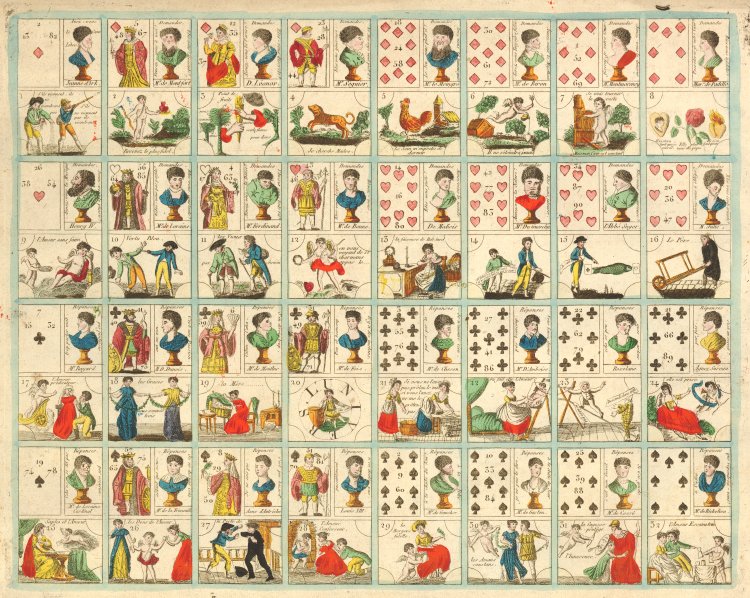
BibliOdyssey has posted a lovely collection of game boards from the past 500 years. I’m particularly taken with this round board of music notation: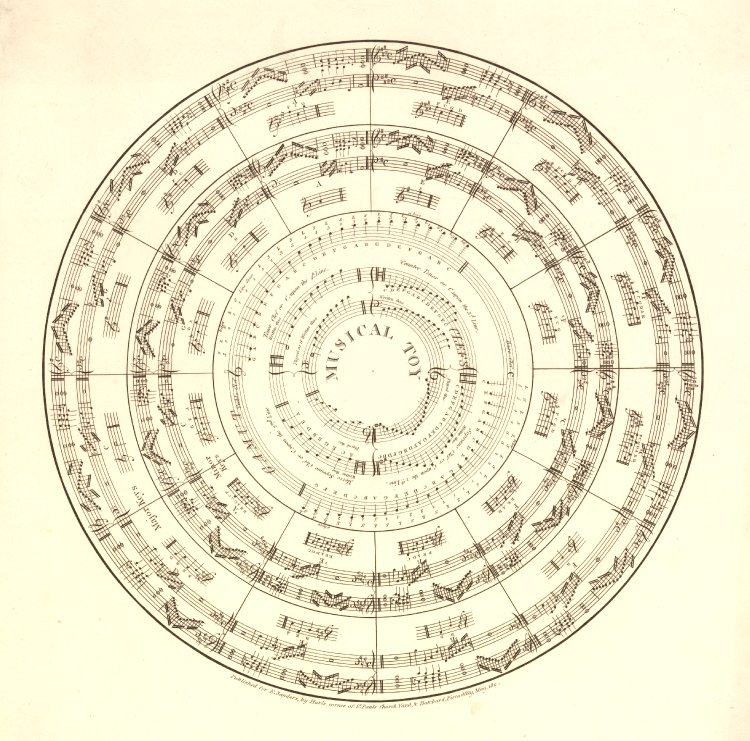
Tuesday, September 9, 2008
Ask me for money
As an arts council, we have to decide on how much funding to give each project. There are theoretically many different ways we could do this. Even if just one person were making the funding decisions, do you try to spread your funding among as many projects as possible or focus on giving more support to better projects? Do you strictly rank all projects by various criteria, or just put them in buckets of good, better, best? If two similar projects ask for different amounts of money, do you give more money to the project that asked for more money (since they asked for more) or equal amounts (since they are similar projects) or more money to the project that asked for less money (since that project is more efficient or is more likely to happen)?
Each of us can individually make these decisions, but how do we make them as a council of 5 to 22 people? Do we each make our own allocations of the complete budget and then average those allocations? If a majority of the council agrees on a particular level of funding for a particular project, should they just vote to allocate that amount and then let us move on to the remaining projects and the remaining money? Should we assign $15,000 of the funding through an averaged allocation (the first approach), and then allow each council member to allocate $500 of funding? I like variations on this last idea because it makes it more meaningful that each individual person is on the council, and allows a project to be fully funded if a few council members feel strongly about supporting that particular project. On the other hand, the first approach allows a few council members who feel strongly that a particular project should not be funded to reduce the amount of funding that the project receives.
As a further complication, how do we deal with conflicts of interest, since one or two council members may not be allowed to vote on particular grants? And how do we ensure that we meet our guidelines of floors and caps on particular types of grants?
We need a process that is comprehensible, easy to implement, doesn’t require endless rounds of voting, and keeps each council member feeling that their voice matters in the process. Opinions are very welcome.
Tuesday, September 2, 2008
A time of renewal
The arts council is changing. Our chair resigned in the spring, and our current treasurer and chair (one person) is leaving before the end of the year. Three new members have just joined the council this summer, so along with the three of us who joined last fall there is little continuity. And in the next two weeks we will rethink our funding priorities and procedures, taking into account this summer’s survey results.
Far more people mailed back the survey than completed it online, and we ended up with around 100 completed surveys. We can pass this along to other councils as a positive example, since gathering community input can be difficult. And once we’ve collated and analyzed the results, we’ll have some good information about our community’s priorities and interests.
What we then need is a sense of ourselves: who are we as council members, what are our individual and collective strengths and weaknesses, who should we call on to handle particular tasks, and who would it be helpful to recruit to join us? Do we need someone who has experience in the outside grants world, or with local or state politics, or with the school system, or with PR and marketing? Or do we already have those bases covered? In a way we need to do a collective self-interview, and that may be more difficult than interviewing our community.
Monday, August 18, 2008
Curves in architecture
What would you do with 50 kilometers of white polypropylene string?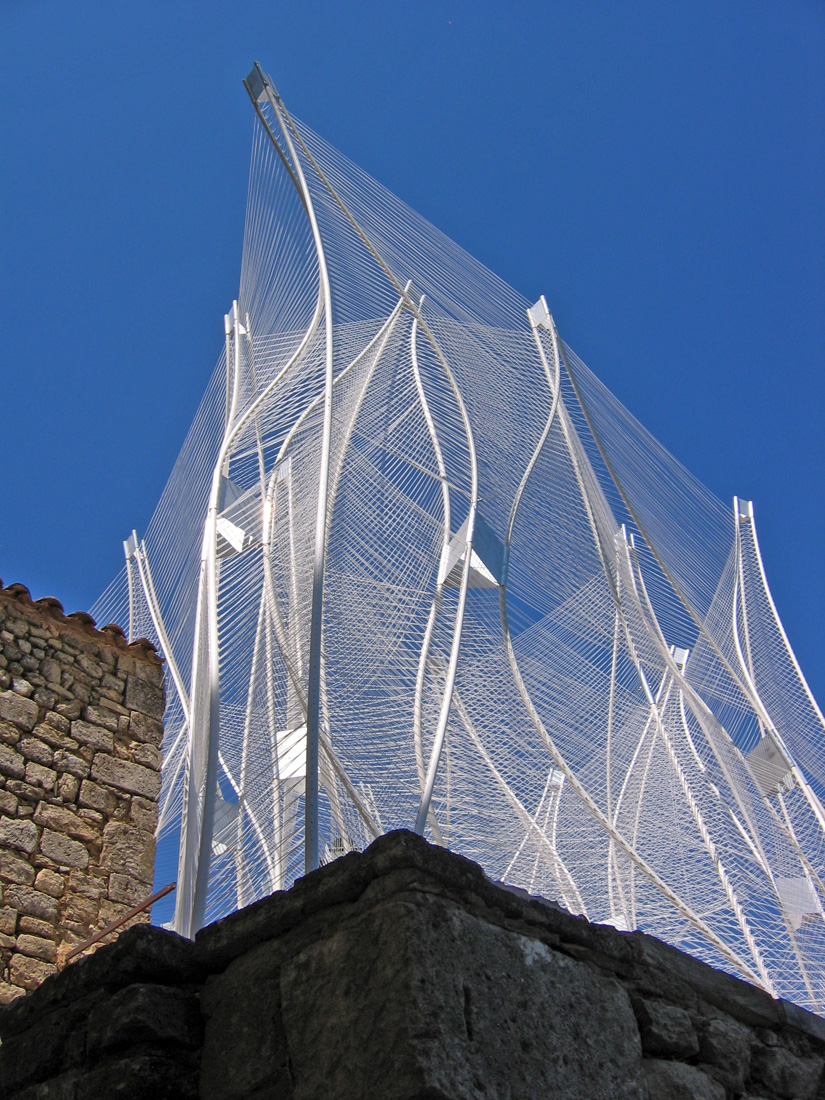
Closer to home, John Kostick created the ultimate pergola.
Our house is mostly straight lines. But perhaps in the back yard we could someday afford a non-rectilinear shed, also built by John Kostick:
Saturday, June 14, 2008
In the eye of the beholder
If you got to nominate somebody for a MacArthur Fellowship (the genius grant), who would it be?
Aside from me, my wife, and my friends?
Victor Gaultney, type designer at SIL and the designer of Gentium. His work is thorough and brilliant, both in producing fonts and in writing about their design and history, and I’d love to see what he will do next.The MacArthur Fellows Program awards unrestricted fellowships to talented individuals who have shown extraordinary originality and dedication in their creative pursuits and a marked capacity for self-direction. There are three criteria for selection of Fellows: exceptional creativity, promise for important future advances based on a track record of significant accomplishment, and potential for the fellowship to facilitate subsequent creative work.
The MacArthur Fellows Program is intended to encourage people of outstanding talent to pursue their own creative, intellectual, and professional inclinations. In keeping with this purpose, the Foundation awards fellowships directly to individuals rather than through institutions. Recipients may be writers, scientists, artists, social scientists, humanists, teachers, entrepreneurs, or those in other fields, with or without institutional affiliations. They may use their fellowship to advance their expertise, engage in bold new work, or, if they wish, to change fields or alter the direction of their careers.
Kirk Hawkins, if he successfully brings the ICON light sport aircraft to the market. We’ll know in 3 years.
Matt Ruff, author of two of the best books I’ve read (Fool on the Hill and Set This House in Order).
Jeffrey Summit, who has created a campus Hillel organization at Tufts that inspires and engages an incredible number of people, continually develops new programs that help the community, and serves as a national role model. He’s done this while also teaching, doing an advanced degree and research in ethnomusicology, and engaging in side projects like putting together a Grammy-nominated album.
I’m a little surprised that I’m having trouble naming artists for this. Lars-Erik Fisk (sculpture), Jan Owen (calligraphy), Shayna Leib (glass), Josiah McElheny (glass). Ok, maybe I’m not having trouble. They’re all producing work that is original, unusual, thought-provoking, and finely executed.
Moses Pendleton, founder, artistic director, and choreographer for Momix. Co-founder of Pilobolus. Though I’m not sure a MacArthur would actually change what he’s doing at this point, because he’s already been so successful.
Thursday, May 1, 2008
Leave nothing but footprints
If a painting is old enough, then copyright no longer applies to the painting. However, museums still want to control (meaning “profit from”) reproductions of their paintings, and in particular they want to sell copies of photographs of the paintings to schools and publishers and prevent other people from putting those photographs on umbrellas and coffee mugs. They used to rely on copyright law, but this little corner of copyright law changed in 1999 when a district court decision in Bridgeman v. Corel said that photographs of paintings don’t have enough originality to qualify for their own copyrights, at least when the photographs are specifically trying to be perfect reproductions of the original image. Uh oh, said the museums. Woot, said everyone else. I am in ur museum, slavishly repurrducing ur priceless artworks, said photography cat.
Rebecca Tushnet has posted a transcript of the fascinating “Who Owns This Image? Art, Access, and the Public Domain after Bridgeman v. Corel” panel in New York on Tuesday, as well as a link to a very relevant Mellon Foundation study: Reproduction charging models & rights policy for digital images in American art museums. If you’re a fan of copyright law, or you have experience with the museums and teaching art history side of things, this is fun reading.
I’ve been surprised to see museums becoming more amenable to consumer photography over the past 10 years, though some such as the DeCordova are still very opposed. Tripods are still banned from most museums, but image-stabilizing lenses and cameras aren’t. Perhaps the museums realize that this is not a battle they can win on the access front while still remaining open to the public. Unless they can convince people that photography inside a museum is as much a security threat as photography on a train.
Tuesday, April 15, 2008
Of fish and flowers
The Harvard Museum of Natural History has a remarkable display of glass botanical models by Leopold and Rudolph Blaschka. These true-to-nature models of flowers, fruits, leaf systems, seed pods, and entire plants are unlike anything you might see elsewhere, and it hardly seems possible that they could all be made of glass. (It would apparently be impossible for them to be created today, because nobody can replicate the Blaschkas’ techniques.)
There’s currently a small special exhibition at the museum of glass models of marine invertebrates created by the Blaschkas. We went a week ago, on a Sunday morning when admission and street parking are free. I now know far more about the varied appearance of sea slugs that I’ll never encounter in the wild. I’ve been trying to figure out why the special exhibition was less interesting than the glass flowers, aside from having far fewer models and all the models being small, and I think familiarity with the subject matter is a big factor. There were some beautiful sea creature models, but their faithful execution in glass was not impressive because I don’t know how faithful the models were. I’ve had a similar reaction to the still life paintings at open studios, where the only ones I’ve really appreciated were the ones that still had the actual arrangements displayed at the studio along with the paintings. Perhaps that’s also why I’ve never found portrait galleries all that engaging—since they are hardly ever portraits of people I know—and part of why so many more people enjoy Madame Toussaud’s wax models of celebrities. We can’t say that something is true to life without a reference, and personally, we spend more time tending our garden than we do deep-sea diving.
Monday, March 17, 2008
Being thanked
Last week, the Massachusetts Cultural Council invited members of local cultural councils and arts councils to come to the State House in the morning and tour the new ICA in the afternoon. About 350 of us took them up on the invitation, and were treated to an interesting and inspiring day. It was fun to meet people from other councils and compare notes, learn some of the history of the MCC and of the State House, and get a sense of the scale of the LCC project. The highlight for me was having a number of legislators, MCC staff, and other speakers all thank us for our work on our local councils.
I’m actually used to being thanked by name by authors and editors in their prefaces, and I’m occasionally called out at a conference whose proceedings I’m publishing. I’ve also received some wonderful personal notes from authors I’ve worked with. It’s gratifying to be recognized for my work, which I like to think I’m good at and which I believe helps my academic field. But the LCC project is larger (even if my role in it is infinitely smaller), and this day at the State House made me really proud to be a part of it. Gallup reportedly did a research poll recently that asked for the first time what made people satisfied with their communities. The first and second most important factors they found were aesthetics and how welcoming the community is. As Anita Walker, the executive director of the MCC, pointed out, our work in supporting and promoting performances and fairs and concerts and lectures and classes and field trips has a real impact on both of those factors, and helps make Massachusetts a place where people want to live. That’s a good feeling, and being thanked for helping out makes it even better.
Thursday, January 17, 2008
If you were a work of art: comments
Results of the most recent poll:
If I were a work of art, I’d want to be a:
painting (1)
sculpture (2)
artist’s book (1)
film (1)
caricature (0)
I’m very curious whether this was an easy choice or a random pick. I chose artist’s book because of the interactive nature of the medium that draws in the viewer. Also, I really like many artist’s books. But I saw some at least off-the-cuff reasons to choose the others: a painting is accessible to many people, a sculpture can seem the most likely to have an animus or spirit, a film is modern and multimodal, and a caricature makes people smile.
Sunday, January 6, 2008
Genius at work
Daniel Pink wrote a year ago in Wired about David Galenson’s hypothesis that there are two types of creative geniuses: conceptual geniuses who peak early and experimental geniuses who peak late. This is a much more interesting hypothesis than the one that geniuses peak at different ages, or the one that simply defines genius as youthful hyperachievement and ignores those who peak late. Who among us does not wish to believe that there is still time for us to achieve fame and fortune, and who does not long for an excuse for not already having achieved both? The notion of the experimental genius, the middle-aged or older little engine that could, heralds plaudits that we could still receive. It drapes workaholics with a faint aroma of noble effort.
I appreciate the notion that creativity is not the sole domain of the young, and I absolutely agree that economists should follow business writers and business consultants down the path of encouraging and measuring creativity. One person’s creativity may be another person’s failure, or worse, another person’s inability to understand the task. But we are shifting, I hope, from an information economy to a creative economy. Galenson offers a reason to keep employing older folks in a creative economy.
Does creativity necessarily include actually creating something? If we remain near Galenson’s original focus on the art world, Geoff Edgers writes in the Boston Globe today about art created by museum employees or collectors rather than by the artist. A sculptor may not pour the metal for a casting of his sculpture, but we expect that he created the original and cared about the final result. Dale Chihuly can no longer blow glass himself, but he closely directs the glassblowers in his studio in experimentation with new techniques and execution of old techniques, and directs the details of his pergolas and other complicated installations. Conceptual artists like Tara Donovan, however, remove themselves much further from the process of creation, selling instructions and provenance to pieces they will never touch or even see. Pure creativity, unsullied by effort. I’d call that process design rather than art, but design is also a creative enterprise. A creative economy will inevitably lead to efficiencies that make us rethink what we value. Conceptual art has just been leading the way.

